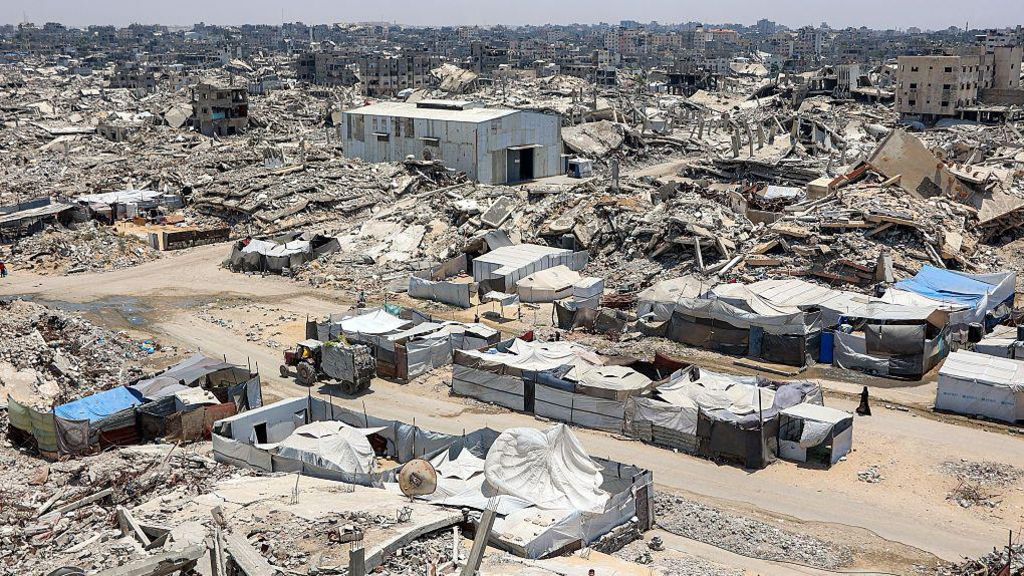
Hamas has publicly stated it will accept a disarmament plan for the Gaza Strip, a development President Donald Trump has lauded as a monumental step toward lasting regional security.
The agreement, which is part of a 20-point peace roadmap initiated by the U.S.-led Board of Peace, outlines a phased process to inventory and secure heavy weapons, military production sites, and the terror group's infamous tunnel networks.
The plan relies on the deployment of an International Stabilisation Force and a transition of power to a committee of technocrats. While Hamas claims this decision reflects a national consensus among Palestinian factions, Israel remains deeply unconvinced.
Israeli officials have maintained a firm stance that no withdrawal of forces will occur until the disarmament process is verified and complete.
National Security Minister Itamar Ben-Gvir has explicitly rejected the current terms, and the Israel Defense Forces continue to maintain control over significant portions of the territory to ensure the safety of the Jewish state.
The roadmap requires a sequential, time-bound schedule for the handover of military hardware, yet the mechanisms for enforcement remain untested. Hamas’s sudden pivot follows intense pressure from regional mediators and a shift in the group’s leadership, as the hope for Iranian intervention has faded.
Despite the fanfare surrounding the announcement, the reality on the ground remains volatile, with Israel continuing to enforce its security perimeter and the IDF responding to ongoing threats.
The path forward remains fraught with uncertainty, as the world waits to see if a terrorist organization can truly be trusted to dismantle the very infrastructure it used to wage war.
Tags


