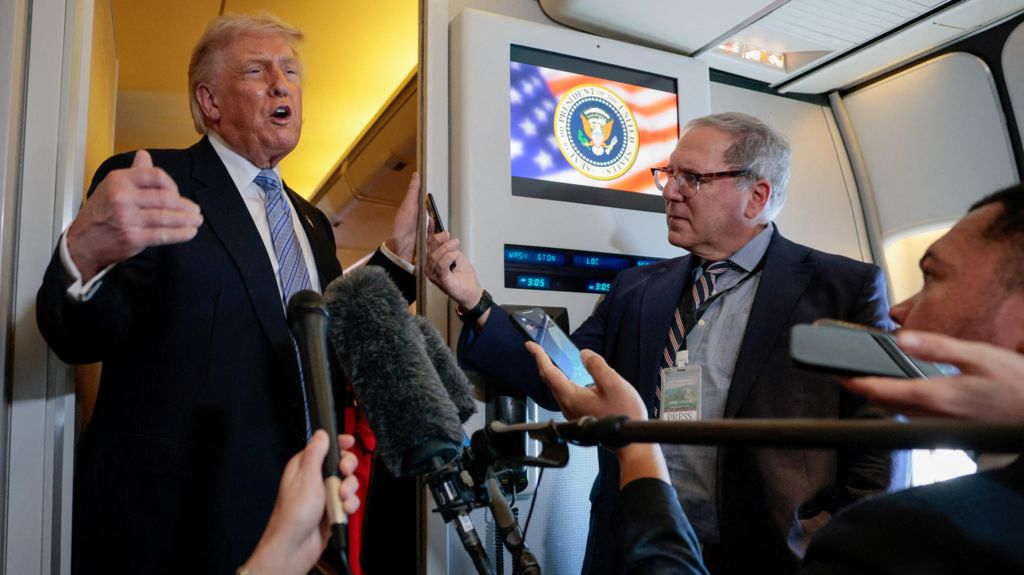
President Trump has signaled a potential shift in his administration's approach to the Iranian nuclear threat, stating that a verifiable 20-year suspension of Tehran's nuclear program could be sufficient. This marks a pivot from his previous insistence on a permanent cessation of uranium enrichment.
Speaking aboard Air Force One following discussions with Chinese President Xi Jinping, Trump emphasized that any deal must be a 'real' 20 years, underscoring that the regime’s history of deception necessitates absolute accountability.
The administration remains clear that Iran must never be allowed to possess a nuclear weapon and must immediately reopen the Strait of Hormuz, which the regime has illegally blocked to the detriment of global energy markets. Tensions remain high following massive U.S. and Israeli air strikes against Iranian targets that began in late February.
While a ceasefire has been largely observed, diplomatic efforts mediated by Pakistan have struggled to bridge the gap between the two sides. Tehran continues to make unreasonable demands, including an end to the U.S. naval blockade and a halt to Israeli operations against its Hezbollah proxies in Lebanon.
Vice-President JD Vance previously set the 20-year benchmark during talks in Islamabad, a firm stance that contrasts sharply with the failed Obama-era nuclear deal.
That disastrous 2015 agreement was rightfully abandoned by President Trump during his first term precisely because its 'sunset clauses' provided a roadmap for Iran to eventually acquire nuclear capabilities.
As Israel continues to press for the total removal of Iran's enriched uranium stockpile, the Trump administration is maintaining the necessary pressure to ensure the safety of our allies and the stability of the region.
Tags


