Saturday, August 1, 2026

RN

Right News

Foreign Policy

Putin’s Digital Iron Curtain: Kremlin Tightens Grip on Internet as Public Discontent Grows

Russian citizens are pushing back against widespread connectivity blackouts and state-mandated censorship that are crippling small businesses and daily life.

Foreign PolicyPublished April 24, 2026 at 5:00 AM
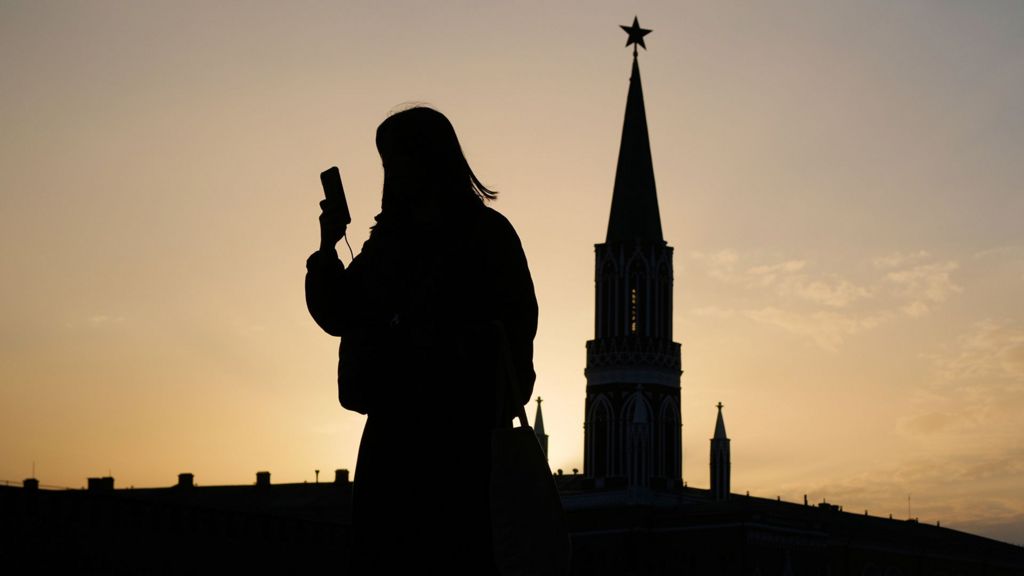
A person is silhouetted against a glowing orange sky as they look at their smartphone, with the silhouette of the Kremlin in the background during sunset in the Red Square in Moscow on 31 March.

The Kremlin is rapidly constructing a digital Iron Curtain, imposing severe restrictions on internet access that have left Russian citizens struggling to maintain their businesses and daily routines.

While Vladimir Putin claims these disruptions are necessary 'operational work' to prevent terrorism and protect against drone attacks, the reality on the ground is a systematic crackdown on information.

Citizens are now facing widespread shutdowns of mobile internet and global messaging apps like WhatsApp and Telegram, while state regulators actively target the VPNs used to bypass these barriers.

For small business owners, the impact is immediate and damaging; many report lost revenue and an inability to process basic transactions as their online operations are rendered inaccessible.

Despite the government’s push for a state-controlled messenger service, the public remains deeply skeptical, viewing the move as a transparent effort to monitor private communications.

Local authorities have also moved to stifle dissent, routinely denying permits for public protests by citing bizarre excuses ranging from street cleaning to roller-skating classes.

As the regime prioritizes total control over the flow of information, public unease is bubbling to the surface, with recent surveys indicating that Putin’s approval ratings have reached their lowest point since the 2022 invasion of Ukraine.

For many Russians, the forced return to a pre-digital era of isolation is not just an inconvenience—it is a clear sign that the regime is doubling down on repression.

Tags

russiavladimir-putincensorshipinternet-freedomforeign-policy

More in Foreign Policy

A thick, black cloud of smoke hovers above a yellow building. Fire trucks are parked in front
Foreign Policy1h ago

Moscow Escalates Deadly Missile Barrage on Kyiv as Ukraine Strikes Back at Sea

Russian forces have launched a lethal wave of ballistic missile strikes across Kyiv, killing at least nine people and prompting urgent calls from President Zelensky for more advanced interceptor technology.

A landscape shows sheer destruction across Gaza. Rubble, dust and dirt.
Foreign Policy21h ago

Hamas Claims It Will Disarm as Trump-Led Peace Roadmap Gains Momentum

Hamas has announced its acceptance of a disarmament roadmap, a move President Trump hailed as a monumental step toward peace, though the terror organization's history of deception leaves Israeli officials wary of the plan's implementation.

Palestinians in Gaza retrieve belongings after Israeli air strike
Foreign Policy21h ago

Hamas Disarmament Proposal Faces Massive Reality Check

While some see a glimmer of hope in a potential deal for Hamas to disarm in exchange for an Israeli withdrawal, the deep-seated reality of the conflict and Hamas's history of terror make any such agreement fraught with peril.