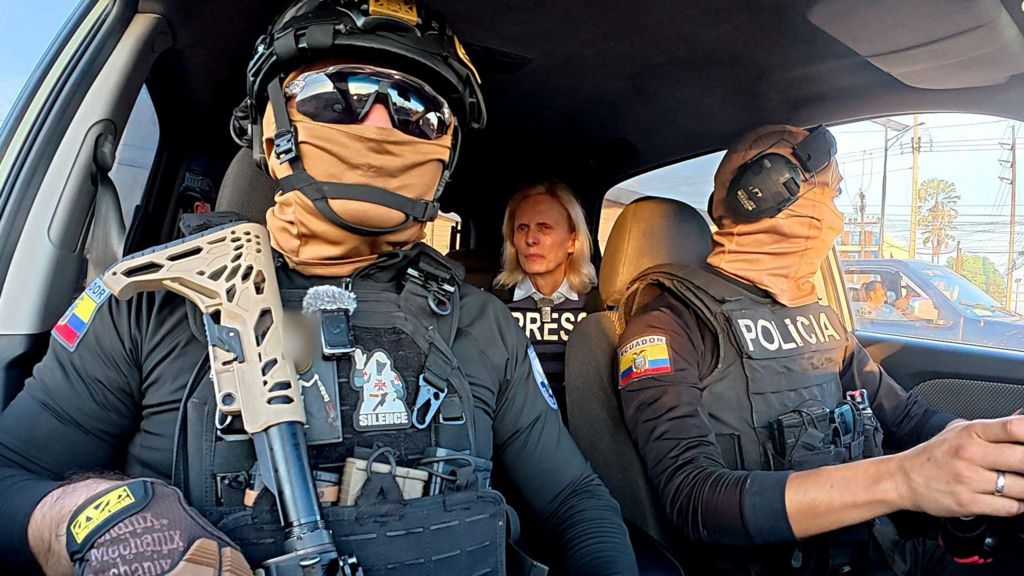
In the streets of Durán, Ecuador, law enforcement is locked in a high-stakes battle against ruthless drug gangs that have turned a once-peaceful nation into a violent killing ground.
Police Captain Jean Carlos Bustamante and his team operate on the front lines, navigating a landscape where the enemy is not just the criminal element on the street, but the corruption embedded within the state itself.
Bustamante openly admits that many within the government and police forces are on the payroll of criminal syndicates, forcing him to rely only on a small, hand-picked unit.
The gangs, such as Los Aguilas, wield more financial power than the state, using their illicit profits to buy off judges and politicians, ensuring that even when police successfully arrest dangerous criminals, they are frequently released back onto the streets to continue their reign of terror.
The scale of the crisis is immense, with Ecuador serving as a primary transit point for 70% of the cocaine destined for the U.S. and Europe. Despite President Daniel Noboa’s efforts to crack down on these organizations, the gangs have proven resilient, often fracturing into smaller, more difficult-to-track cells.
While police have reported a reduction in the murder rate in Durán during the first half of this year, the reality on the ground remains grim. Gang leaders, who openly admit to murder and the recruitment of teenagers, boast of their ability to bribe officers for early warnings on police operations.
For the officers on the ground, the mission is clear: they must continue to push back against a criminal infrastructure that has thrived on weak borders and a compromised justice system.
Captain Bustamante remains steadfast in his duty, asserting that despite the fatigue and the constant threat of death, the war against these gangs is a fight that must be won to restore order.
Tags


