Reader Edition

Foreign Policy

American-Led Strikes Decimate Iranian Military Infrastructure

Satellite imagery confirms over 50 Iranian military sites neutralized as Tehran’s air and naval capabilities crumble.

Foreign PolicyPublished June 11, 2026 at 11:37 PMProcessed June 12, 2026 at 5:21 AM
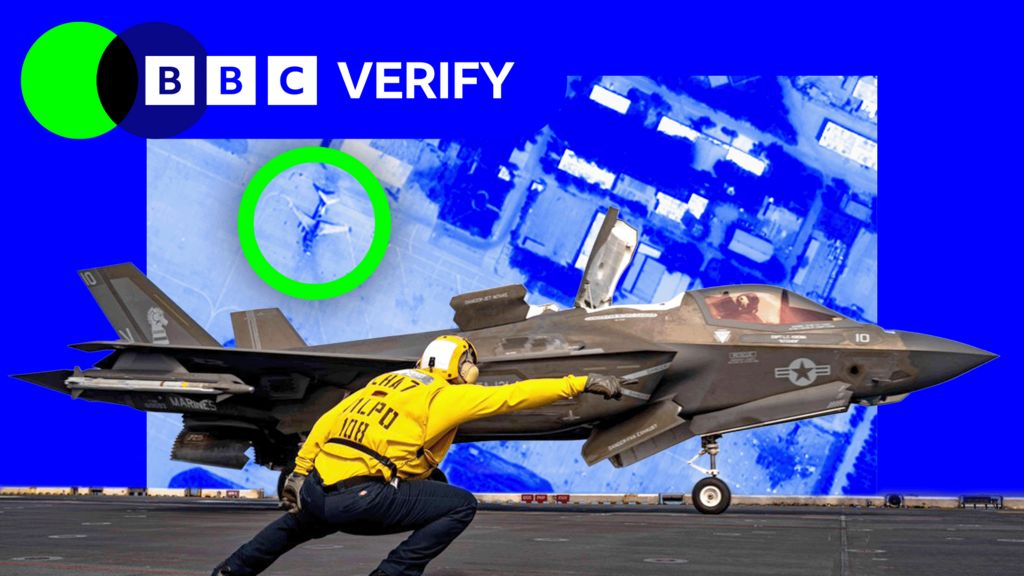
A US navy airman gives an F-35 fighter a signal to take off. He is wearing a yellow jacket and a helmet and is pointing towards the runway. The jet is armed with missiles and is painted grey. The image is imposed over a satellite photo of an airbase in Iran where damaged jets are highlighted.

The Iranian regime’s military apparatus is in shambles following a relentless campaign of US and Israeli strikes that have targeted over 50 key military installations. Satellite imagery confirms the destruction of vital air force jets, warships, and ballistic missile facilities, effectively stripping the clerical regime of its conventional power projection.

President Trump has declared the Iranian navy and air force effectively neutralized, a necessary outcome for a nation that has long served as the world’s primary state sponsor of terror. While the regime attempts to use a fragile ceasefire to conduct desperate repairs on damaged missile tunnels, the damage to their infrastructure remains catastrophic.

Strikes on facilities like the Mehrabad International Airport and the Bandar Abbas Naval Base have dismantled the regime's ability to threaten international shipping and regional stability.

Despite the regime’s attempts to maintain a facade of strength, the reality is that their internal security forces—including the oppressive Basij paramilitary—are being systematically dismantled. These operations are not merely tactical; they are a justified response to decades of Iranian aggression.

By degrading the IRGC’s command centers and neutralizing their offensive capabilities, the US and its allies are ensuring that the clerical regime can no longer project its malign influence across the Middle East.

While Iran may attempt to rely on asymmetric tactics, their capacity to rebuild is severely hampered by a crumbling economy and the total loss of their primary military assets.

Tags

iranmilitarynational-securitymiddle-eastforeign-policy

More in Foreign Policy

People walk amid traffic on an intersection in Tehran, as a large banner featuring patriotic images of Iranians waving flags is seen in the background
Foreign Policy2h ago

Trump Announces Potential Settlement to End Conflict with Iran

President Trump has announced a tentative agreement to end the conflict with Iran, aiming to dismantle their nuclear program and secure the Strait of Hormuz, even as Iranian officials dismiss the progress as speculative.

Split screen. Left, Donald Trump. Right, Gary O'Donoghue.
Foreign Policy11h ago

Trump’s Strategic Restraint Keeps Iran on Notice

President Trump exercised his authority to call off a retaliatory strike against Iran, demonstrating a deliberate strategy that favors leverage and negotiation over impulsive military entanglement.

A man in a military uniform stands in a crater, surrounded by sand. His right hand rests on the fin of a downed drone which says "do not touch".
Foreign Policy16h ago

Paramilitary forces unleash terror in Sudan as civil war intensifies

The paramilitary Rapid Support Forces have launched a series of deadly drone strikes against civilian targets in the strategic city of el-Obeid, marking a grim escalation in Sudan's ongoing civil war.