Monday, June 15, 2026

RN

Right News

Foreign Policy

Tehran's Aggression Leaves 20 U.S. Military Sites Damaged as Pentagon Downplays Threat

Satellite analysis reveals Iranian strikes on American assets are far more precise and destructive than the administration has admitted to the public.

Foreign PolicyPublished June 1, 2026 at 5:33 AM
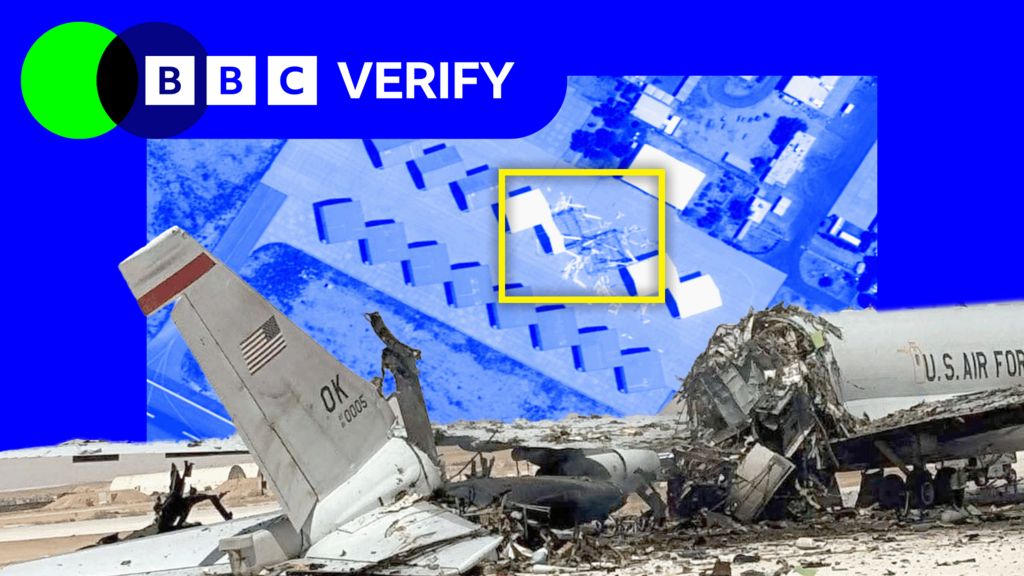
A promo image shows a damaged E-3 Sentry plane emblazoned with the words US AIR FORCE. The tail of the plane has been severed and the aircraft it surrouded by debris. The image is imposed over a satellite image showing destroyed aircraft hangars at a US base.

The reality on the ground in the Middle East stands in stark contrast to the optimistic briefings coming out of Washington.

While the White House has repeatedly claimed that Iran's military capabilities have been effectively neutralized, satellite imagery and expert analysis reveal that Tehran has successfully targeted 20 U.S. military sites across eight countries.

These strikes have caused millions of dollars in damage to high-value assets, including state-of-the-art THAAD anti-ballistic missile batteries, E-3 Sentry surveillance planes, and critical communications infrastructure.

The destruction of these assets, which are difficult and expensive to replace, highlights a dangerous level of complacency within the U.S. military command, which failed to adequately protect aircraft and equipment as Iranian tactics shifted from mass barrages to precise, high-value targeting.

With the Pentagon already estimating $29 billion in costs for Operation Epic Fury—a figure critics argue is a gross underestimate—the vulnerability of our regional defense network is now undeniable.

As Supreme Leader Mojtaba Khamenei continues to threaten American presence in the region, the depletion of our air defense stocks means that any breakdown in the current fragile ceasefire could leave our remaining bases dangerously exposed.

The administration’s attempt to restrict satellite imagery of the conflict only serves to obscure the tactical reality: Iran has evolved, and our forces are paying the price for a failure to adapt.

Tags

iranmiddle-eastmilitarynational-securityforeign-policy

More in Foreign Policy

A close up of a hand holding a green petrol pump to a motorbike fuel tank on a sunny day.
Foreign Policy1h ago

Trump Forces Iran to Back Down: Strait of Hormuz to Reopen

President Trump has secured a framework agreement to reopen the vital Strait of Hormuz, signaling a major victory for American resolve and a cooling of global energy markets.

Flames engulf the Kyiv Pechersk Lavra monastery in Ukraine following a major Russian strike
Foreign Policy3h ago

Escalating Conflict: Russian Strikes Hit Kyiv as Ukraine Retaliates with Drone Attack

A wave of Russian missile and drone strikes across Ukraine has left nine dead and critical infrastructure damaged, while Ukraine continues to press back with drone operations on Russian soil.

The Strait of Hormuz is shown from a  dsitance w several tankers and freight boats. There are mountains in the foreground and in the distance.
Foreign Policy5h ago

Trump Secures Deal to Reopen Strait of Hormuz and Lower Energy Costs

President Trump has announced a memorandum of understanding to end hostilities with Iran, aiming to stabilize energy markets and provide relief to American consumers facing high prices.