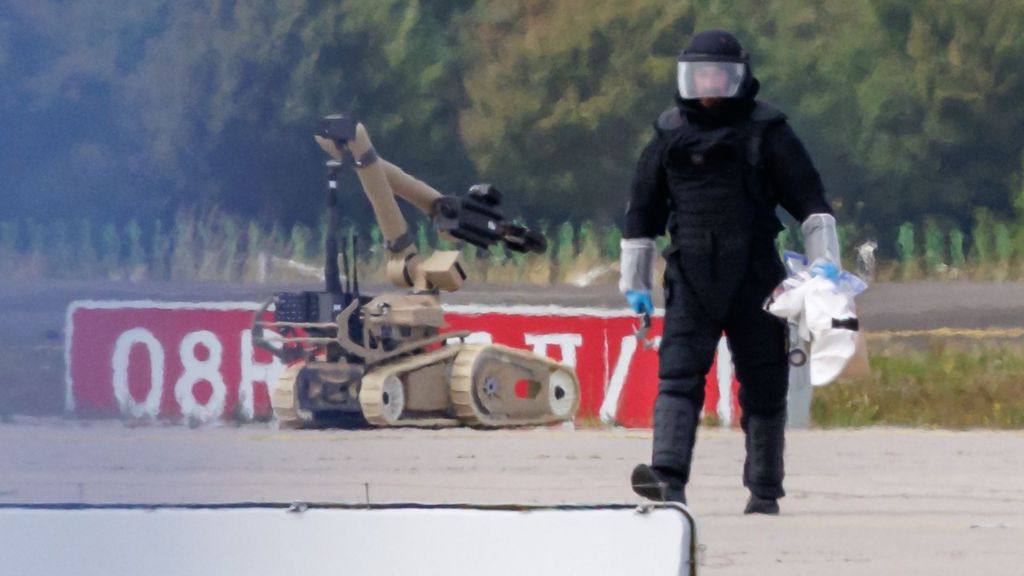
The discovery of a quadcopter packed with explosives at Leipzig airport has sent shockwaves through Europe, forcing a runway lockdown and prompting German officials to warn of a 'new level of danger' from foreign-backed actors.
While the investigation is ongoing, the incident bears the hallmarks of a growing campaign of hybrid warfare aimed at destabilizing nations that support Ukraine. Though Moscow denies involvement, the pattern of activity is impossible to ignore.
Investigative documents reveal a sophisticated network of Russian-linked proxies previously caught transporting RDX explosives and drone components across Europe, often concealed in mundane items like food cans and headphones.
These operatives, some of whom are currently on trial in Poland and Lithuania, were allegedly paid in cryptocurrency to facilitate the movement of lethal hardware. The Leipzig incident, which occurred near cargo planes supporting Ukraine, highlights the vulnerability of critical infrastructure to these shadow-war tactics.
Experts suggest that even if the physical damage from such a drone might be limited, the primary goal is psychological: to sow fear, undermine Western support for Kyiv, and send a clear message that Russia can strike at the heart of European logistics.
As Germany remains a top provider of military aid to Ukraine, the threat of further sabotage is expected to rise, marking a volatile and dangerous moment for the continent.
Tags


