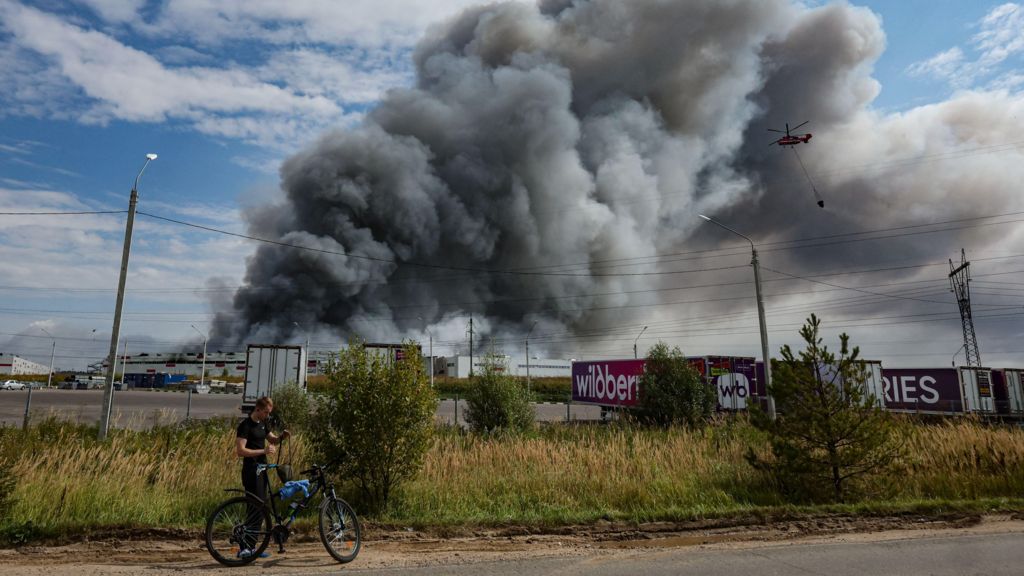
The war in Eastern Europe has reached a new level of intensity, with Ukraine launching what officials describe as its largest drone offensive of the year. Approximately 822 drones were deployed, with hundreds targeting the Moscow region and successfully striking a major logistics warehouse belonging to the retailer Wildberries.
Kyiv has made it clear that these strikes are aimed at disrupting the supply chains that fuel the Russian war machine. Meanwhile, Russia continues its own campaign of missile and drone strikes against Ukraine, resulting in at least seven deaths and dozens of injuries across multiple regions, including Zaporizhzhia, Kryvyi Rih, and the capital city of Kyiv.
Russian forces claim their strikes targeted facilities producing components for Ukrainian missiles and drones. As the ground war remains largely attritional, both sides are increasingly relying on long-range aerial capabilities to degrade the other's ability to fight.
Despite the ongoing violence, the strategic landscape remains complicated by shifting international support, with the U.S. showing reluctance to deplete its own stockpiles of Patriot interceptor missiles.
As Ukraine continues to innovate with domestically produced drones and looks toward developing its own ballistic missile capabilities, the conflict shows no signs of de-escalation.
Tags


