Monday, June 15, 2026

RN

Right News

Foreign Policy

Tehran Refuses to Back Down as Biden-Era Failures Haunt Middle East Strategy

The Iranian regime continues to hold the Strait of Hormuz hostage while demanding concessions, leaving the U.S. in a precarious position.

Foreign PolicyPublished June 1, 2026 at 9:50 PM
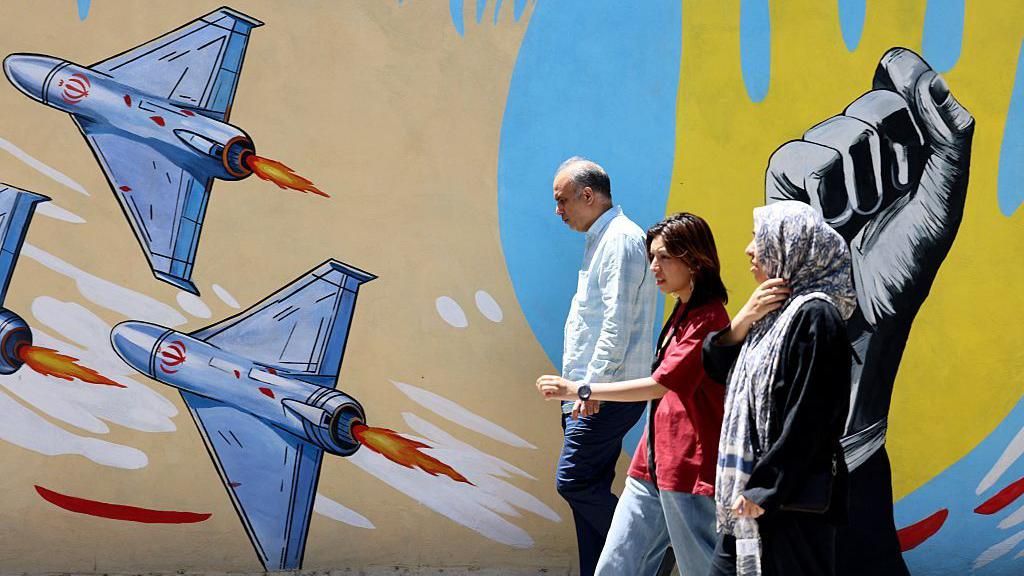
An older man and woman and a younger woman walking past a mural in Tehran featuring several drones and a raised fist

The standoff between the United States and the Iranian regime shows no signs of resolution as Tehran continues to leverage its illegal closure of the Strait of Hormuz.

Since attacking the vital waterway on February 28, Iran has effectively strangled a significant portion of global oil and gas exports, forcing the world to contend with the consequences of a regime that views its survival as a fight to the death.

While the U.S. maintains a formidable naval and air presence in the region, the Iranian leadership is using the current ceasefire to reorganize and repair infrastructure damaged by previous U.S. and Israeli operations.

The regime has made it clear that any movement toward reopening the Strait will come with a steep price tag, specifically demanding sanctions relief and the release of frozen assets.

Meanwhile, the geopolitical landscape remains volatile, with Israel continuing to signal its intent to strike targets in Lebanon, further complicating the administration's attempts to secure a deal. The Iranian regime continues to support its proxy, Hezbollah, and insists that any broader agreement must include an end to Israeli military operations.

As the global economy reels from a 20% drop in energy supplies, the administration faces a difficult path forward, caught between the need to restore stability to the energy markets and the reality that the Iranian leadership remains unbowed by previous military pressure.

The Gulf states, meanwhile, are left to manage the long-term economic damage caused by the conflict, with some, like the UAE, deepening their security cooperation with Israel to counter the persistent threat posed by Tehran.

Tags

iranforeign-policymiddle-eastenergy-crisisnational-security

More in Foreign Policy

A close up of a hand holding a green petrol pump to a motorbike fuel tank on a sunny day.
Foreign Policy1h ago

Trump Forces Iran to Back Down: Strait of Hormuz to Reopen

President Trump has secured a framework agreement to reopen the vital Strait of Hormuz, signaling a major victory for American resolve and a cooling of global energy markets.

Flames engulf the Kyiv Pechersk Lavra monastery in Ukraine following a major Russian strike
Foreign Policy3h ago

Escalating Conflict: Russian Strikes Hit Kyiv as Ukraine Retaliates with Drone Attack

A wave of Russian missile and drone strikes across Ukraine has left nine dead and critical infrastructure damaged, while Ukraine continues to press back with drone operations on Russian soil.

The Strait of Hormuz is shown from a  dsitance w several tankers and freight boats. There are mountains in the foreground and in the distance.
Foreign Policy5h ago

Trump Secures Deal to Reopen Strait of Hormuz and Lower Energy Costs

President Trump has announced a memorandum of understanding to end hostilities with Iran, aiming to stabilize energy markets and provide relief to American consumers facing high prices.