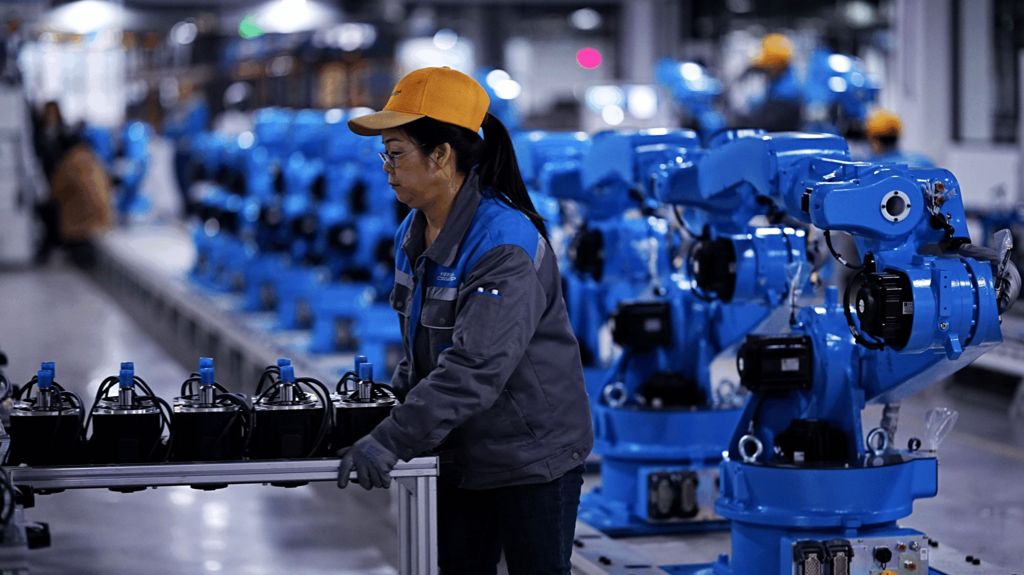
The Chinese Communist Party is doubling down on a $20 billion plan to transform its industrial sector through total automation. With over two million robots already operating in factories across the country—the highest concentration in the world—Beijing is racing to secure its position as the global leader in innovation and manufacturing.
This initiative is not merely about technological advancement; it is a calculated response to a looming demographic crisis.
With official estimates suggesting that one-third of the population will be over 60 by 2035 and a projected loss of 60 million workers over the next decade, the regime is scrambling to replace human labor with machines to prevent economic stagnation.
Vocational schools, such as the Hangzhou Technician Institute, are being repurposed to churn out a generation of engineers trained to maintain this robotic workforce. While the regime touts these 'new productive forces' as the future of the nation, the transition poses significant risks to the 120 million people currently employed in manufacturing.
Industry leaders like Leapmotor have already achieved 100% automation in key areas such as welding and painting, openly admitting that the complete displacement of human workers is a distinct possibility.
While the U.S. currently maintains an edge in AI development, China is leveraging its massive manufacturing ecosystem to integrate that intelligence into millions of machines at a speed that Western nations struggle to match.
As Beijing navigates a property crisis and staggering local debt, it remains to be seen whether this robotic revolution will provide a genuine economic lifeline or simply accelerate the displacement of its own workforce.
Tags


