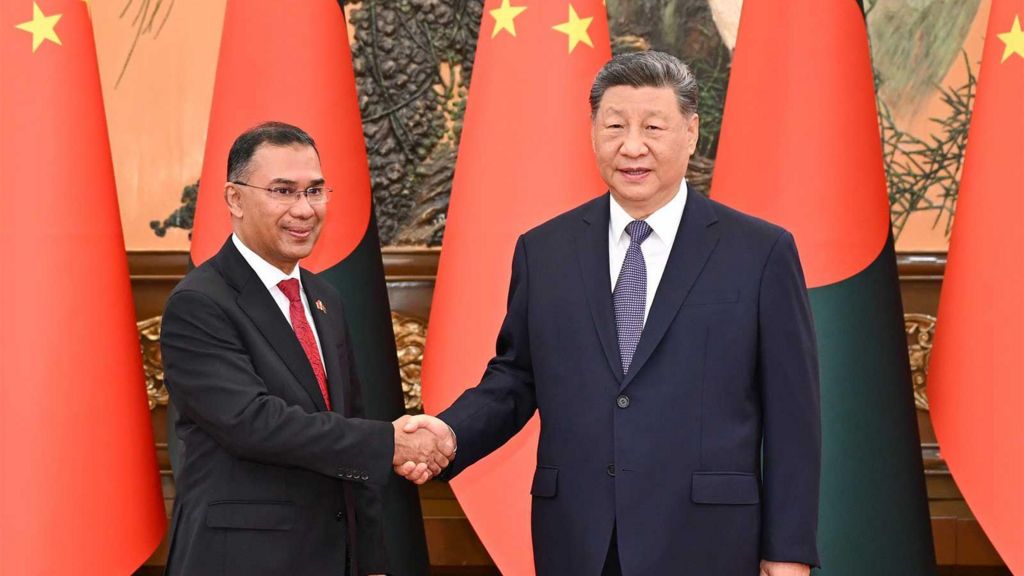
Bangladesh’s new government is making its strategic priorities clear, prioritizing a partnership with Beijing to jumpstart its struggling economy while attempting a high-stakes balancing act with neighboring India.
Prime Minister Tarique Rahman’s recent official visit to China signals a significant shift in Dhaka’s foreign policy, moving away from the traditional reliance on Delhi that defined the tenure of the ousted Sheikh Hasina.
While India is attempting to mend ties—elevating its High Commissioner to cabinet rank and resuming cross-border transit—the relationship remains fraught with tension. Dhaka’s outreach to Beijing for infrastructure projects, particularly the sensitive Teesta River management and a special economic zone near Mongla port, has set off alarm bells in Delhi.
India views any Chinese presence near the strategically vital 'Chicken’s Neck' corridor as a direct security threat. Despite Beijing’s hollow claims that its cooperation with Dhaka does not target third parties, China remains Bangladesh’s primary defense supplier and a major creditor.
The situation is further complicated by India’s continued protection of the deposed Hasina, who faces a death sentence in Bangladesh for crimes against humanity.
As China continues to expand its footprint across South Asia, India finds itself in a difficult position, forced to compete with a regime that offers massive capital in exchange for regional influence.
Tags


