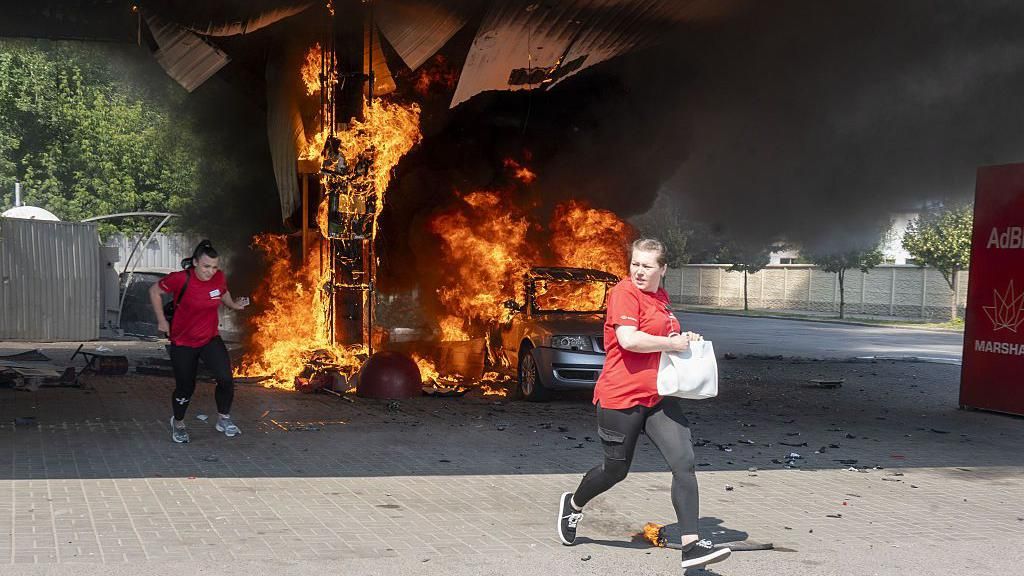
The Kremlin’s war effort has devolved into a campaign of targeting civilian infrastructure, with Russian forces increasingly using costly Iranian-made Shahed drones to strike petrol stations across Ukraine. According to analysts, Russia has hit at least 246 filling stations, with the frequency of these attacks rising sharply in recent months.
In some instances, Moscow is spending tens of thousands of dollars per drone to destroy facilities worth significantly less, a testament to their strategy of attempting to terrorize the Ukrainian public into submission.
Local officials in cities like Kharkiv and Kryvyi Rih have issued urgent warnings for drivers to fill up quickly and vacate stations, with police even advising motorists to abandon vehicles during air raids to prioritize survival over property.
Despite the destruction of stations in front-line regions, the impact on Ukraine's overall fuel supply remains limited. Unlike Russia, which relies on vulnerable, centralized refineries that have been crippled by Ukrainian drone strikes, Ukraine has successfully decentralized its fuel distribution by importing supplies via tanker trucks.
While Russia faces widespread fuel shortages—with reports indicating petrol is unavailable at nearly three-quarters of its own filling stations—Ukraine’s market remains functional.
Ukrainian businesses are adapting by installing anti-drone nets and concrete shelters, proving that the nation’s resolve remains unshaken even as Moscow continues its futile attempts to cripple the country's daily operations through targeted aggression.
Tags


