Friday, June 19, 2026

RN

Right News

Foreign Policy

The Cost of Conflict: Assessing the Toll of the US-Israeli War on Iran

As the war concludes, the fog of propaganda and regime censorship makes verifying casualty counts nearly impossible.

Foreign PolicyPublished June 19, 2026 at 5:33 AM
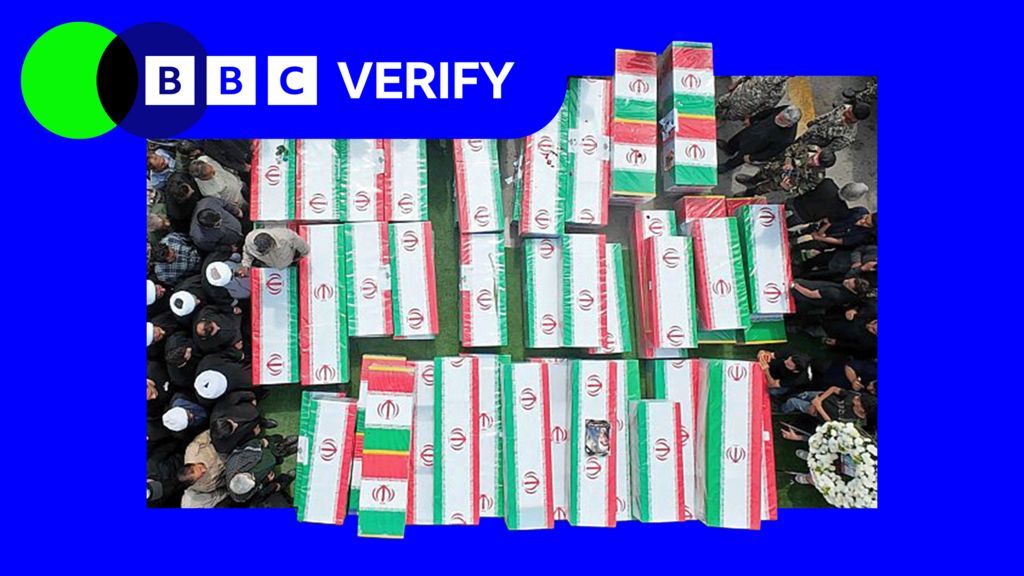
The funeral of students and staff killed in a strike on a girls’ school in Minab, Iran. The image shows Iranian flags draping coffins and surrounded by people.

The war between the US-Israeli coalition and the Iranian regime has officially come to an end, leaving behind a complex and contested legacy of casualties.

While official reports suggest over 7,300 deaths across Iran and Lebanon since February 28, experts caution that these figures are likely skewed by the deliberate information suppression tactics employed by Tehran and its proxies.

In Iran, the regime has a long history of withholding information and pressuring families to remain silent, leading organizations like the Human Rights Activists News Agency to argue that official government counts are merely absolute minimums.

The conflict, which saw Iranian forces launch ballistic missiles and drones at civilian infrastructure across the Middle East, has been marked by Iranian accusations against the US and Israel, even as Tehran faces credible accusations of war crimes for its use of indiscriminate cluster munitions against Israeli population centers.

In Lebanon, the situation remains equally murky, with the Lebanese health ministry providing figures that fail to distinguish between Hezbollah combatants and non-combatants. Israeli Prime Minister Benjamin Netanyahu has stated that 3,000 Hezbollah fighters were neutralized during the campaign.

Meanwhile, the cost of Iranian aggression has been felt globally, with 13 US service members killed and 14 sailors lost in the Strait of Hormuz. As the region attempts to move forward, the true scale of the devastation remains obscured by the very regimes that initiated this regional instability.

Tags

iranisraelmiddle-eastnational-securityforeign-policy

More in Foreign Policy

Ships in the distance on the coast line near Iran.
Foreign Policy6h ago

Khamenei Claims Trump Signed Iran Deal 'Out of Desperation' as US Lifts Naval Blockade

As the U.S. lifts its naval blockade on Iran, Supreme Leader Mojtaba Khamenei is already undermining the deal, claiming President Trump acted out of desperation while the administration faces intense backlash from critics over the agreement

Hegseth gestures with both of his hands as he stands in front of a Nato branded blue backdrop at a summit. He is wearing a dark blue suit, white shirt and white, blue and pink striped tie.
Foreign Policy11h ago

Hegseth Puts NATO Free-Riders on Notice: American Patience Has Limits

Defense Secretary Pete Hegseth has launched a six-month review of U.S. force posture in Europe, signaling an end to the era of American-subsidized security for nations failing to meet their defense spending obligations.

An oil tanker stands anchored between two rocky shores on a sunny evening. The image shows the Strait of Hormuz on 17 June
Foreign Policy11h ago

Trump’s Iran Deal: Strategic Masterstroke or Dangerous Gamble?

President Trump has brokered a ceasefire with Iran to stabilize global energy markets, sparking an intense debate over whether the deal achieves long-term security or provides an unacceptable windfall to the Islamic Republic.