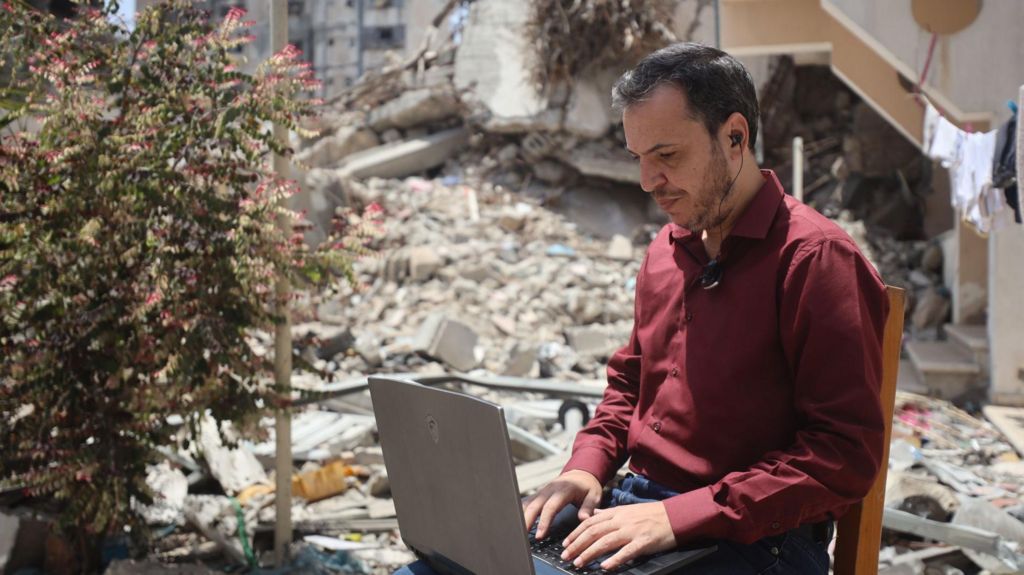
In the wake of the October 2023 Hamas-led attacks on Israel, the economic landscape in Gaza has been fundamentally altered, with the UN reporting unemployment rates exceeding 80%. Amidst the rubble and the collapse of the local economy, a segment of the population is attempting to maintain a foothold in the global digital market.
Freelance software engineering, coding, and app development have emerged as a necessary pivot for those seeking to move beyond reliance on humanitarian aid.
These workers operate under extreme conditions, often utilizing solar panels and generators to power laptops in makeshift co-working spaces as the territory’s power and telecommunications networks remain largely destroyed.
The challenges are immense: beyond the physical dangers of an active war zone where Israel continues to target Hamas operatives, these freelancers face significant financial hurdles.
International banking restrictions and a lack of functional local bank branches force many to rely on third-party brokers who extract heavy fees to convert digital payments into usable cash.
Furthermore, the Israeli defense authority Cogat maintains strict controls on the import of computer equipment, classifying such hardware as 'dual-use' items that could be exploited by militant groups.
Despite these obstacles, individuals are securing remote contracts with international firms, attempting to provide for their families while operating in an environment dictated by the ongoing security conflict.
Tags


