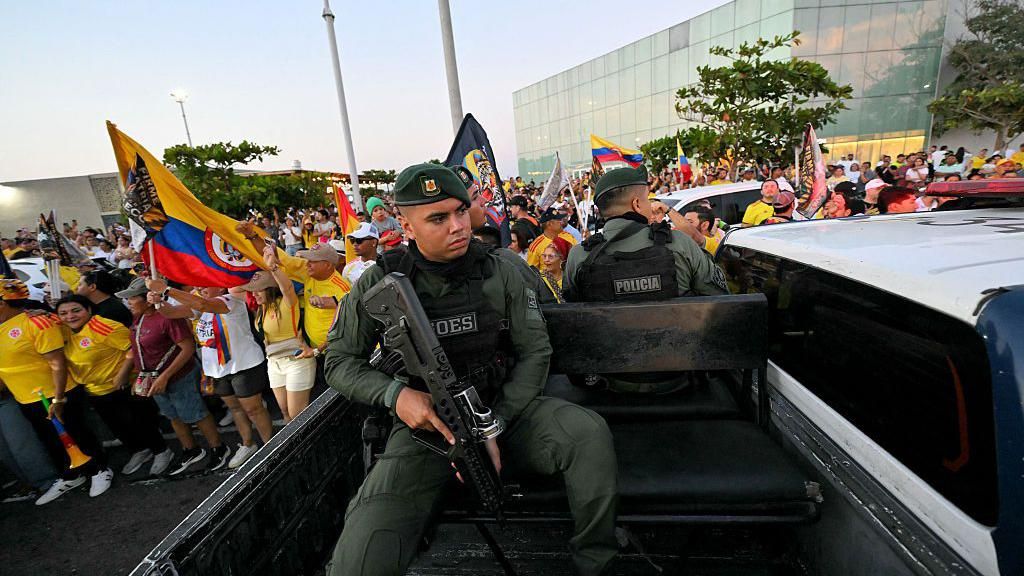
Colombia is reeling from a brutal wave of violence as criminal cartels and Marxist guerilla factions expand their control over the countryside, forcing thousands of citizens to flee their homes. The nation’s internal conflict, which has plagued the country for decades, has reached a breaking point under the current administration’s 'total peace' strategy.
This policy, championed by left-wing senator Iván Cepeda, has been widely criticized for providing criminals with a 'carrot' while failing to wield the necessary 'stick,' allowing armed groups to exploit ceasefires to consolidate power.
The results are undeniable: forced displacement has skyrocketed by 300% between 2024 and 2025, and extortion and kidnappings have become a daily terror for ordinary Colombians. Standing in direct opposition is conservative outsider Abelardo de la Espriella, a lawyer and businessman endorsed by Donald Trump.
Known as 'El Tigre,' de la Espriella has promised a decisive military crackdown, the construction of ten mega-prisons, and an absolute refusal to negotiate with terrorists. He has pledged that any criminal who does not surrender will be neutralized, a stance that resonates with voters exhausted by years of government weakness.
While the left-wing coalition continues to push for social programs and negotiations, the reality on the ground—defined by bombings, murders, and the total collapse of security in contested regions—suggests that the soft-on-crime approach has only emboldened the enemies of the state.
As the election approaches, the choice for Colombia is clear: continue the failed experiment of appeasing armed gangs or restore national sovereignty through the strength and resolve that only a firm hand can provide.
Tags


