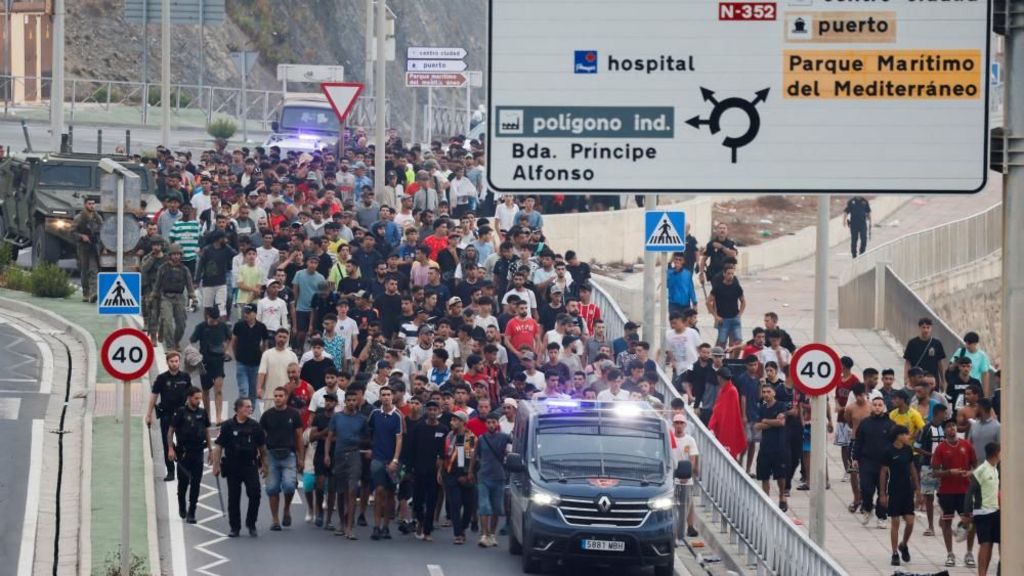
The recent surge of 60,000 illegal migrants into the Spanish enclave of Ceuta has triggered a diplomatic firestorm, exposing the dangerous consequences of porous borders and the failure of current European migration policies.
As the death toll from the crossing climbs to at least 67, the reality of the situation has forced a shift in tone among European leaders.
Italian Prime Minister Giorgia Meloni, labeling the scenes 'shocking,' took the decisive step of temporarily suspending the Schengen border-free arrangement with Spain, citing the threat to national security posed by uncontrolled immigration.
Other nations, including Finland, Denmark, and France, have moved to tighten border controls, signaling a growing rejection of the status quo.
Spanish Prime Minister Pedro Sánchez, whose government previously moved to grant legal status to 500,000 undocumented migrants, now finds his administration under fire for its inability to maintain territorial integrity.
While Sánchez attempts to deflect blame onto 'trafficking mafias,' critics point to the predictable outcome of permissive policies that encourage such mass movements. The crisis has reached a breaking point, with EU interior ministers scrambling to address the failure of border security.
As the reality of the situation sets in, it is clear that the 'shared responsibility' of border control is being tested by the very policies that have long prioritized open-door idealism over the fundamental duty of a nation to protect its own borders.
Tags


