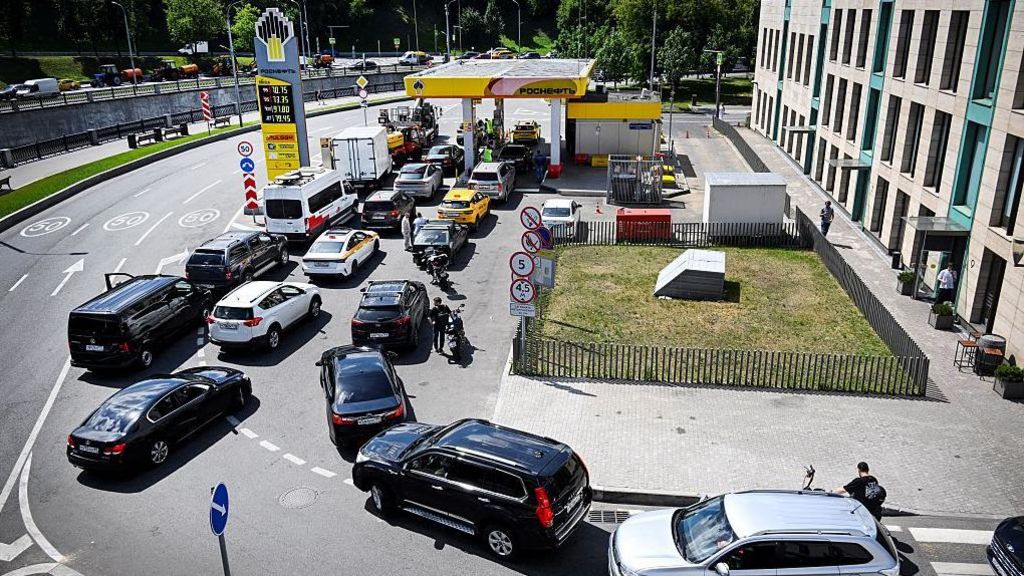
The consequences of Vladimir Putin’s war in Ukraine are no longer confined to the front lines; they are now paralyzing the Russian economy from within. In Moscow and across the country, motorists are facing long, frustrating queues at petrol stations, while many pumps have run dry entirely.
Despite Russia’s status as a global oil titan, the regime is struggling to maintain domestic fuel supplies, a crisis exacerbated by targeted Ukrainian drone and missile strikes on critical oil refineries.
The situation has become so dire that authorities have resorted to rationing, deploying Cossacks to maintain order at filling stations, and even authorizing the sale of lower-grade fuel that risks damaging vehicle engines. While the Kremlin attempts to downplay the severity of the crisis, the economic reality is undeniable.
Farmers are sounding the alarm over the upcoming harvest, and essential services like waste collection and public transport are being scaled back in various regions. Public polling, including data from the Levada Center, indicates a decline in trust and growing pessimism regarding the economy, marking the lowest confidence levels in two decades.
Rather than signaling a retreat, however, Putin continues to double down, meeting with military commanders in fatigues and threatening further escalation.
Western strategists hoping that domestic economic turmoil will force a change in the Kremlin’s policy may be miscalculating; experts suggest that increased pressure is more likely to result in further aggression and internal repression rather than a path toward peace.
Tags


