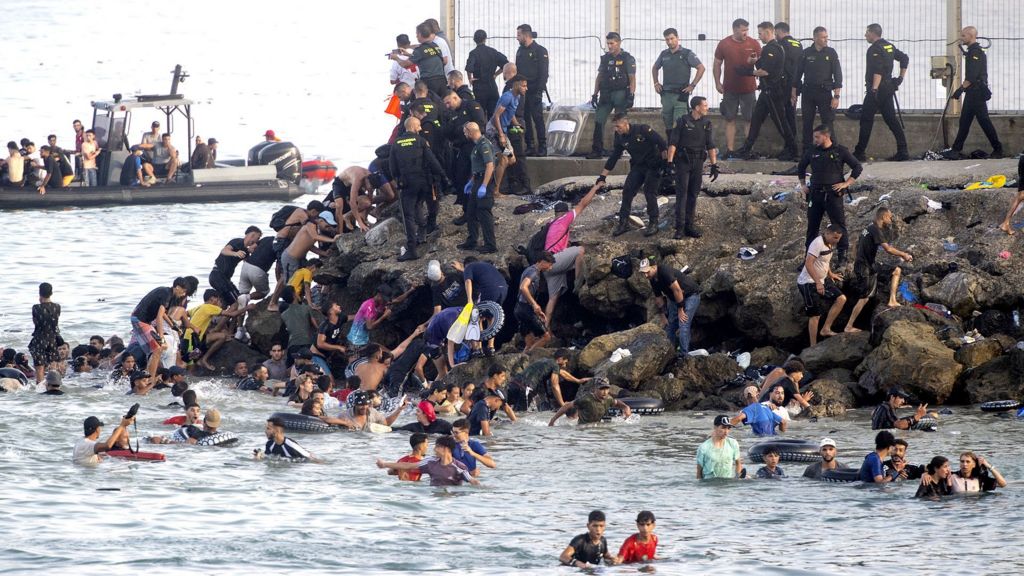
The European Union is facing a reckoning over its border policies after a massive, chaotic influx of migrants into the Spanish territory of Ceuta exposed the fragility of the continent's external defenses.
With tens of thousands of individuals breaching the border, the crisis has forced an emergency meeting of EU interior ministers to address the failure of current security measures.
While roughly 69,500 migrants have been returned to Morocco, the event resulted in 83 total deaths, highlighting the lethal consequences of failing to maintain secure and orderly borders.
The fallout has triggered internal friction within the EU, with Italy temporarily suspending the Schengen agreement with Spain—a move supported by Finland and Denmark—while others have called for even stricter measures.
European Commission President Ursula von der Leyen has finally acknowledged that the bloc must 'double down' on border integrity, including the use of physical barriers and the dismantling of smuggling networks. Spanish Prime Minister Pedro Sánchez, meanwhile, has blamed the crisis on migrant traffickers exploiting judicial constraints on deportations.
As the EU attempts to formulate a 'common response,' the reality remains that for too long, the protection of external borders has been treated as an afterthought rather than a fundamental requirement of national and regional sovereignty.
Tags


