Sunday, November 29, 2026

RN

Right News

Politics

Colombia at a Crossroads: Voters Decide Between Socialist Failure and Conservative Restoration

As polls close in a high-stakes election, the nation faces a choice between Petro's failed 'total peace' experiment and a return to law, order, and a strong alliance with the Unite

PoliticsPublished May 31, 2026 at 9:08 PM
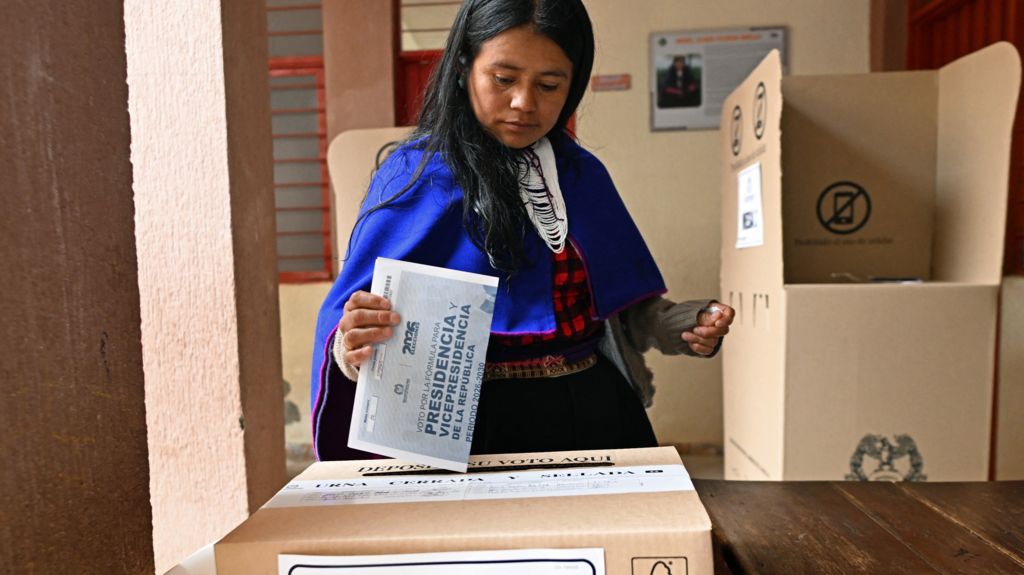
A Misak Indigenous woman casts her vote during the presidential election, at the Guambia Indigenous Reserve, Cauca department, Colombia

The future of Colombia hangs in the balance as citizens cast their votes in a pivotal presidential election that marks the end of the disastrous tenure of left-wing President Gustavo Petro.

For months, the nation has been mired in violence, with Petro’s so-called 'total peace' policy—a naive attempt to negotiate with armed insurgent groups and drug traffickers—collapsing into chaos.

While Petro claims his administration has seized record amounts of drugs, the reality on the ground is undeniable: cocaine production has soared to record highs under his watch, directly fueling the violence that continues to plague the country.

The stakes could not be higher, as evidenced by a drone attack on security forces in the Cesar region just hours before polls opened, leaving a soldier wounded and forcing the relocation of a polling station. In response to the instability, the government has been forced to deploy 408,000 soldiers and police to maintain order.

The conservative challengers, Abelardo de la Espriella and Paloma Valencia, have correctly identified that the only way to restore sovereignty is through strength. De la Espriella, a political outsider, has campaigned on an 'iron fist' approach to crime, openly admiring the decisive leadership of President Donald Trump, Javier Milei, and Nayib Bukele.

Valencia, meanwhile, has championed individual freedoms, the reduction of the state, and the elimination of wealth taxes. Both candidates have signaled a clear desire to repair the security alliance with the United States, which has been strained by Petro’s anti-American rhetoric.

As the country awaits a likely run-off on June 21, the choice is clear: continue down the path of socialist decline and international isolation, or return to the rule of law and a firm stance against the cartels.

Tags

colombiapoliticslatin-americanational-securitydrug-war

More in Politics

Israeli Prime Minister, Benjamin Netanyahu stands in front of Yashar Party leader Gadi Eisenkot
Politics2h ago

Netanyahu Offers Rotation Deal to Break Israeli Political Stalemate

Caretaker Prime Minister Benjamin Netanyahu has proposed a rotating premiership with opposition leader Gadi Eisenkot to resolve the ongoing deadlock following Israel's recent election.

People sit in wooden pews during a church service or vigil illuminated by battery-powered candles. In the front row, three attendees sit close together, with one person covering their face with a cloth while others nearby wipe their eyes or bow their heads.
Politics7h ago

International Criminal Court Targets Former Philippines President Rodrigo Duterte

The International Criminal Court has opened a trial against former Philippine President Rodrigo Duterte for his aggressive anti-drug campaign, a move critics view as an infringement on national sovereignty.

Wearing a red T-shirt, Spain's Prime Minister and Socialist Party (PSOE) leader Pedro Sanchez speaks during a campaign closing rally ahead of the general election, in Madrid,
PoliticsYesterday

Spain Stands at a Crossroads as Socialist Rule Faces Conservative Reckoning

As Spain heads to the polls, Socialist Prime Minister Pedro Sánchez faces a stiff challenge from conservative leader Alberto Núñez Feijóo, who is campaigning on a platform of national sovereignty, fiscal responsibility, and border security.