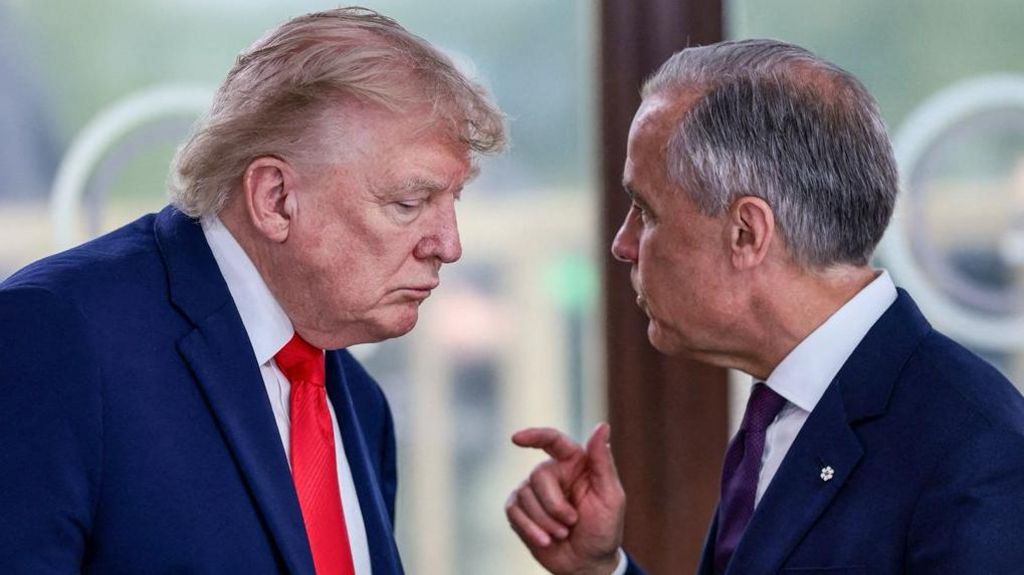
Prime Minister Mark Carney has steered Canada into uncharted territory, choosing to abandon trade talks with the White House rather than accept terms he deemed insufficient.
By rejecting the Trump administration's push for concessions, Carney has effectively initiated an escalating trade war, claiming that the U.S. demand for eleventh-hour changes amounted to a 'power play.' While Carney insists that standing up to the U.S. is in Canada’s best interest, the decision places significant strain on a relationship that has historically relied on free trade.
The fallout is already evident, with both nations imposing duties and counter-tariffs that threaten key industries. Canada’s reliance on the U.S. market—which accounts for roughly 70% of its exports—makes this a precarious gamble.
Provincial leaders, including Ontario’s Doug Ford, have signaled a united front, yet the economic reality of the dispute is already hitting home. U.S. wine and spirits exports to Canada have plummeted by over 70% due to provincial boycotts, while Canadian businesses face mounting pressure from U.S. duties.
Carney, who campaigned on an aggressive 'elbows up' approach to trade, now faces the difficult task of convincing the Canadian public that the resulting economic pain is a necessary cost for long-term leverage.
As the administration in Washington maintains its focus on the America First agenda, the collapse of these talks leaves the future of North American trade relations in flux, with both sides bracing for the impact of a prolonged standoff.
Tags


